KALAHARI WATER VAKANSIEPLAAS
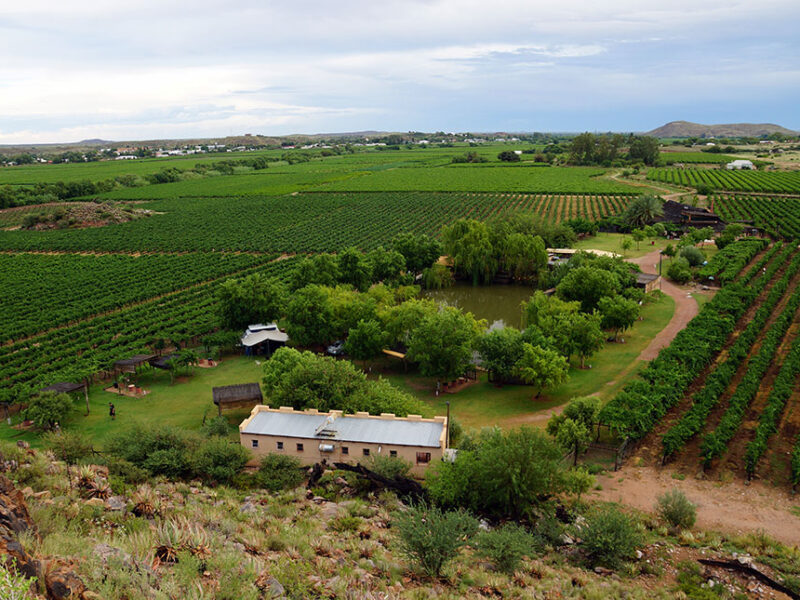
Kalahari Water is a riverside campsite located on a working vineyard island along the Orange River, just outside Keimoes in the Northern Cape. It offers relaxed farm-style camping in the Green Kalahari, combining river access, shade, and open space in a low-density setting suited to caravans, trailers, and tents.
Supporting image prompt: Landscape photo of shaded campsites with braai areas next to the Orange River, vineyards in the background, late afternoon light, caption “Riverside camping at Kalahari Water near Keimoes in the Northern Cape”.
Kalahari Water is positioned in an area where the arid Kalahari meets fertile riverbanks, creating a contrast between desert conditions and irrigated farmland. The campsite is part of an active agricultural property, which gives the area a quiet, functional character rather than a resort-style atmosphere.
The campsite is suitable for travellers looking for a practical overnight stop as well as longer stays for people who enjoy slow travel and outdoor living. It appeals to campers who value space, shade, and access to water without excessive rules or structured entertainment.
The location near Keimoes makes Kalahari Water a convenient base for Northern Cape travel routes. It works well for travellers moving between Upington, the Kgalagadi region, Namaqualand, and the western interior of South Africa.
Campsite Layout and Stands
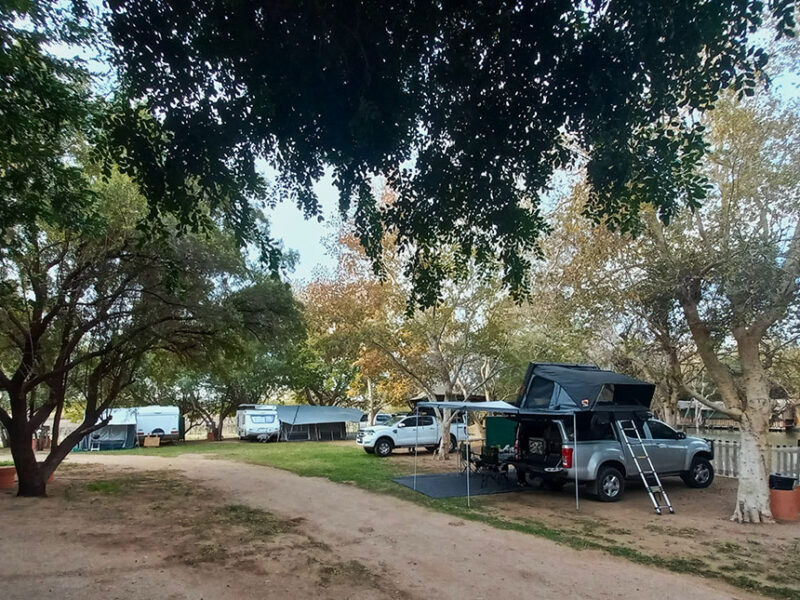
Kalahari Water offers a selection of camping and caravan stands spread out across the farm near the river and irrigation dam. The stands are designed to accommodate a range of camping setups, including tents, off-road caravans, and standard caravans.
Most stands are positioned under mature trees, providing natural shade that is important in the Northern Cape climate. The spacing between stands allows for privacy and reduced noise, even during busier periods.
Each stand is equipped with a built-in braai area, allowing campers to prepare meals outdoors. Electrical connections are available, making the campsite suitable for caravans and campers who rely on basic power for fridges or lighting.
Water points are accessible within the campsite, supporting longer stays and daily camping needs. The ground surfaces are generally firm and level, reducing the need for extensive setup or levelling equipment.
Ablution and Shared Facilities
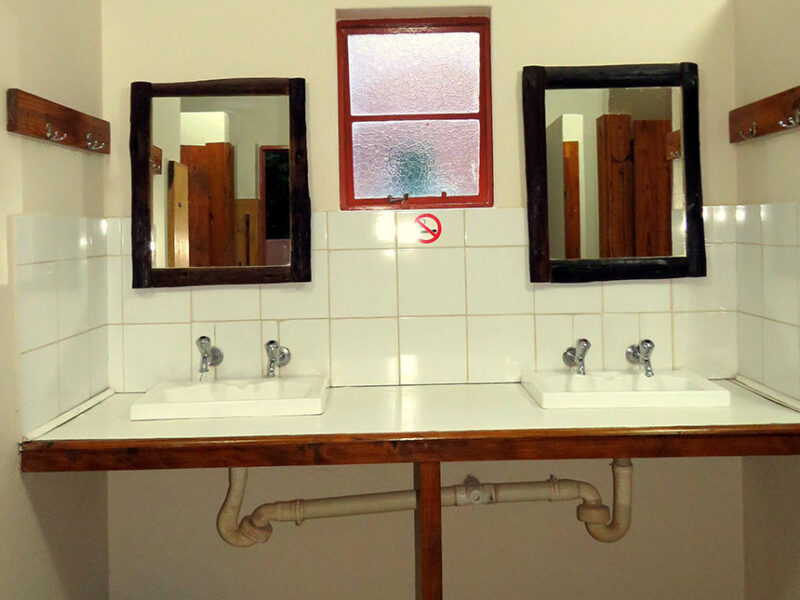
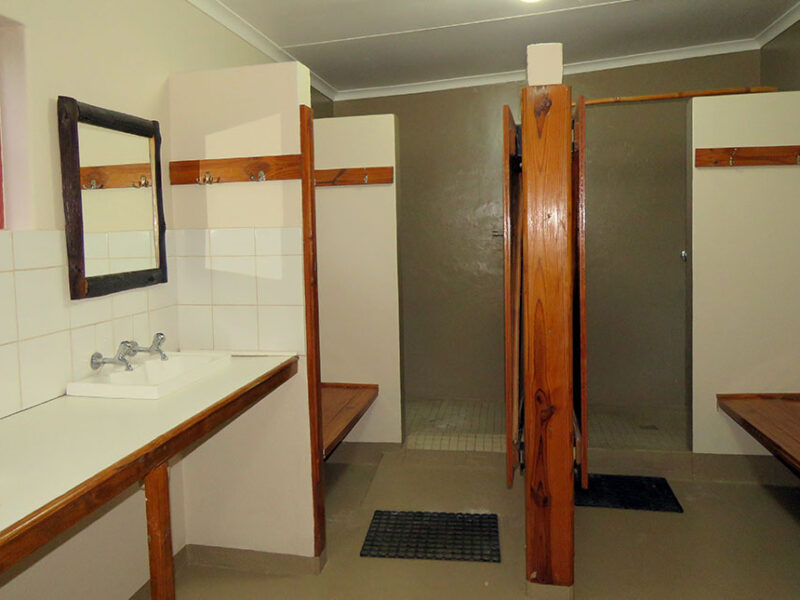
The campsite provides shared ablution facilities with toilets and hot-water showers. These facilities are centrally located and easily accessible from the camping stands.
Ablutions are functional rather than luxurious, focusing on cleanliness and reliability. Washing-up areas are available for campers preparing meals at their stands.
The overall layout of the facilities supports self-sufficient camping while still offering essential comforts. Campers are expected to manage their own equipment and supplies responsibly.
River and Water Features
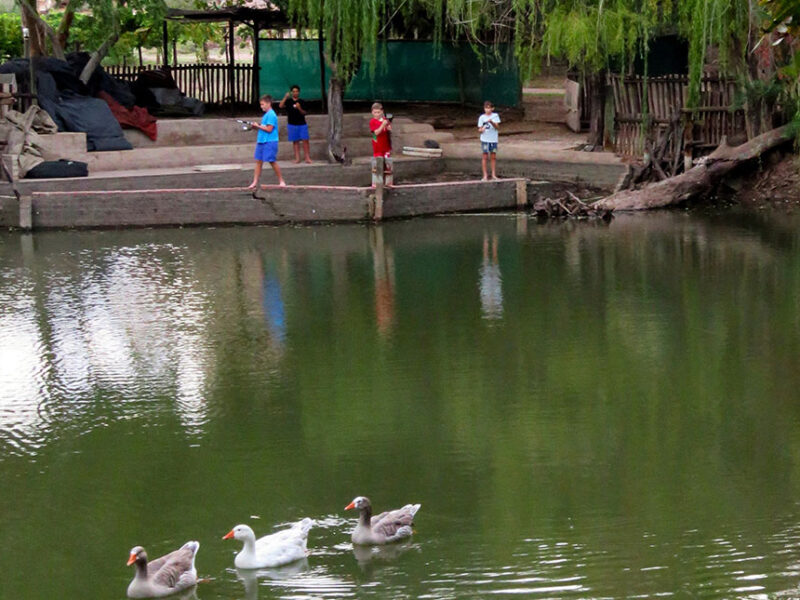
One of the defining features of Kalahari Water is its proximity to the Orange River and associated irrigation structures. The presence of water creates a cooler microclimate and supports birdlife and vegetation not typically found in arid areas.
Campers can spend time near the riverbanks, enjoying the open views and slower pace of farm life. The irrigation dam adds to the calm atmosphere and is a focal point for the campsite layout.
Water levels and access vary depending on season and river conditions. Visitors should always follow safety guidelines when using natural water features.
Activities on the Farm
Kalahari Water supports a range of informal outdoor activities suited to the natural setting. Fishing is possible in the river or dam, provided campers bring their own equipment and comply with local regulations.
The farm environment allows for walking, casual cycling, and exploration of vineyard and river-edge areas. These activities are unstructured and self-guided, appealing to campers who prefer independence.
Birdwatching is a common pastime due to the riverine habitat and surrounding farmland. Early mornings and late afternoons are particularly active times for bird movement.
The campsite also serves as a base for 4×4 exploration in the broader Northern Cape region. Guests with suitable vehicles can explore nearby gravel routes and scenic landscapes.
Climate and Seasonal Considerations
The Northern Cape climate is characterised by hot summers and mild winters. Shade and water access make Kalahari Water more comfortable than exposed desert campsites during warmer months.
Summer visitors should plan for high daytime temperatures and ensure adequate hydration and sun protection. Winter camping is generally comfortable, with cooler nights and pleasant daytime conditions.
Wind conditions can vary depending on weather systems and time of year. Campers should secure tents and awnings appropriately.
Suitability and Camp Style
Kalahari Water is best suited to campers who appreciate quiet surroundings and minimal interference. It is appropriate for couples, families, and small groups who enjoy outdoor living without organised activities.
The campsite does not operate as a resort and does not cater to entertainment-driven camping. It is designed for people who are comfortable managing their own schedules and equipment.
Longer stays are possible for travellers who want to slow down and experience the rhythm of farm life along the river. The relaxed approach makes it suitable for long-term campers and overlanders.
Accessibility and Nearby Services
The campsite is easily accessible by road and does not require specialised vehicles under normal conditions. Standard vehicles towing caravans can reach the campsite without difficulty.
Keimoes is a short drive away and provides access to fuel, groceries, and basic services. This proximity allows campers to restock without disrupting their stay.
The broader Upington area offers additional services, medical facilities, and retail options for travellers continuing their journey. The campsite location supports both short stopovers and extended travel plans.
General Camping Experience
Camping at Kalahari Water focuses on simplicity, space, and natural surroundings. The combination of river access, shade, and working farmland creates a setting that feels practical rather than commercial.
The atmosphere is calm and informal, with an emphasis on respecting the environment and other campers. Noise levels are generally low, and evenings are quiet.
Kalahari Water suits campers who value location and space over modern infrastructure. It works well for travellers who want a reliable, scenic campsite in the Northern Cape without unnecessary complexity.
Conclusion
Kalahari Water offers a functional riverside camping experience on a working vineyard near Keimoes in the Northern Cape. With shaded stands, basic facilities, and access to the Orange River, it provides a practical and relaxed base for travellers exploring the Green Kalahari and surrounding regions.
Its farm setting, low-density layout, and self-sufficient camping style make it suitable for campers who prefer independence and natural surroundings. Kalahari Water is best described as a calm, reliable campsite for people travelling through or spending time in the Northern Cape.